


I’ve seen good leaders lose a room full of people instantly with a three-letter word… But. It’s small and easy to miss, however it obliterates everything that came before it.
Early in my leadership career, I relied heavily on what a lot of us know as the feedback sandwich; you know the one, start with praise, deliver the criticism and end with more praise. It felt balanced, considered and always had that but right there in the middle.
One day, I was force feeding another feedback sandwich to some team members along the lines of, “You’ve been doing some really strong work lately…”. Before I could get any further one of them cut in. “And what’s the complaint?” they asked. That was the moment it landed for me.
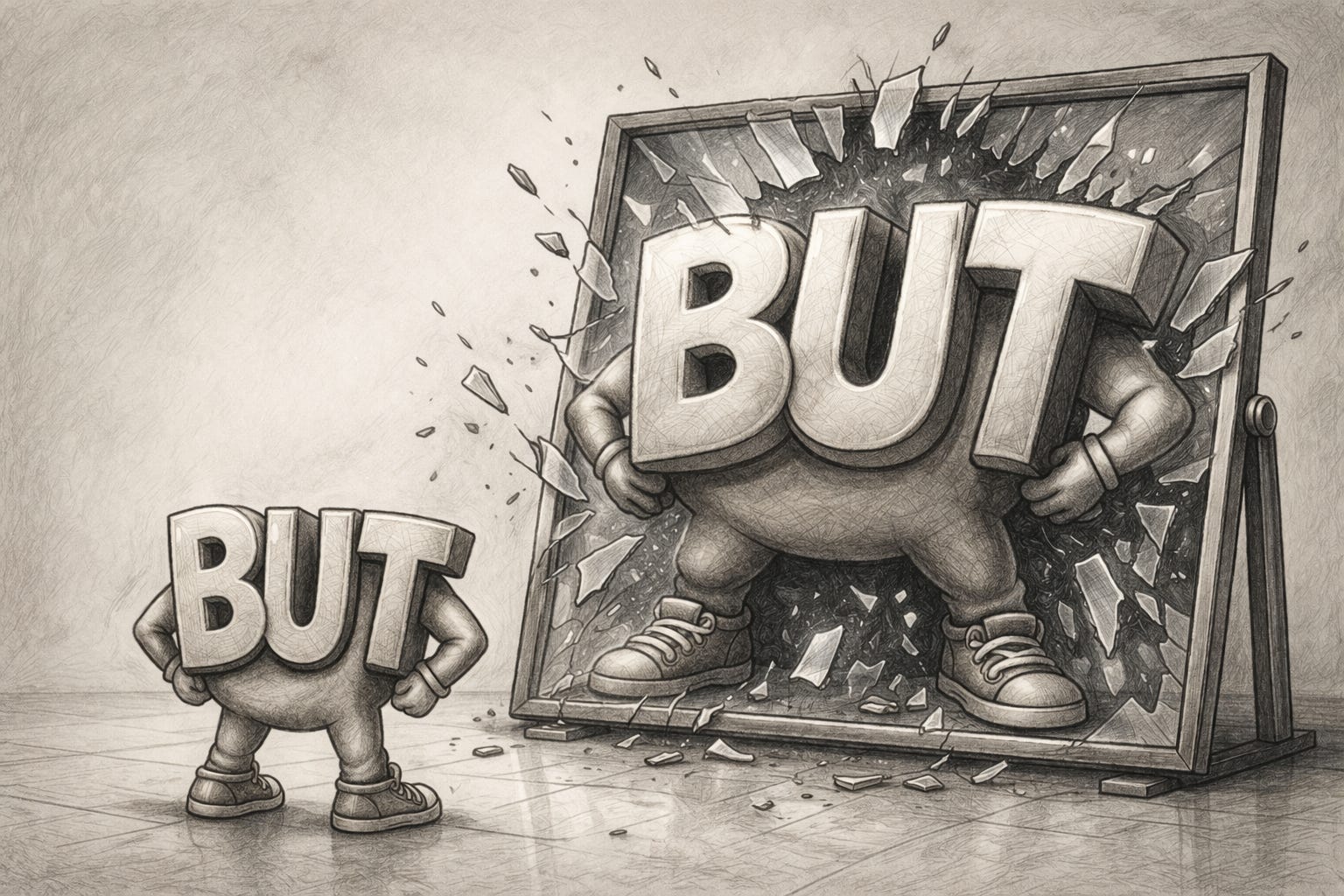
They were not getting the feedback, they were just waiting for the but.
You hear it everywhere. “You’re doing great work, but…”, “I really value what you’ve done here, but…”, “I like them, but…”. The message changes the moment that word appears. Everything before it fades to nothing and what follows becomes the only thing people take away.
That’s the problem with but, it doesn’t balance a message, it changes it. We use it with good intent, to soften the blow, all the while devaluing the praise and sharpening the criticism. People learn the pattern over time. The opening becomes predictable and the trust in what you’re saying starts to slip.
If someone’s doing well, then say it. Let it stand on its own. If something needs to improve, say that too, but respectfully and without the proverbial sandwich. I've learned that you don't need a bridging word that depletes trust, you need brevity. People can handle direct conversations. What they struggle with is mixed signals and rehearsed patterns.
I stopped using the feedback sandwich from that day on, not because its intent is bad, rather because people loose trust in your messages when they are punctuated with those buts.
When you sense a but is about to spill over your lips, pause. Decide what you really want to express and say it, cleanly. It’s a small shift that makes your message easier to trust, and a lot harder to misinterpret.
Such a simple fix too. Thanks for sharing, no more buts from me 😊
Thanks Mel