


Time to get going, Ash.
Focus, get out and get going.
No amount of self-talk was helping; I simply couldn’t get my hands off the steering wheel and open the car door.
One Monday morning in Brisbane, nearly twenty-five years ago, I sat in a parking space just down the road from the Milton call centre where I worked as a Team Leader. Gripping the steering wheel tightly enough to whiten my knuckles, people passed with takeaway coffees and chatted about their weekends. My chest was tight, as it had been since I’d left home on the 40-minute drive, and my stomach churned. Despite the cool morning, sweat ran from my underarms onto my chest, and I couldn’t work out what I was so afraid of.
I was in the unrelenting grip of anxiety.
I stared intently at the dashboard clock; 7:51
I’ll get out and go at 7:53, I promised myself.
Two-minutes seemed a lifetime away and the bargain with myself brought some momentary relief.
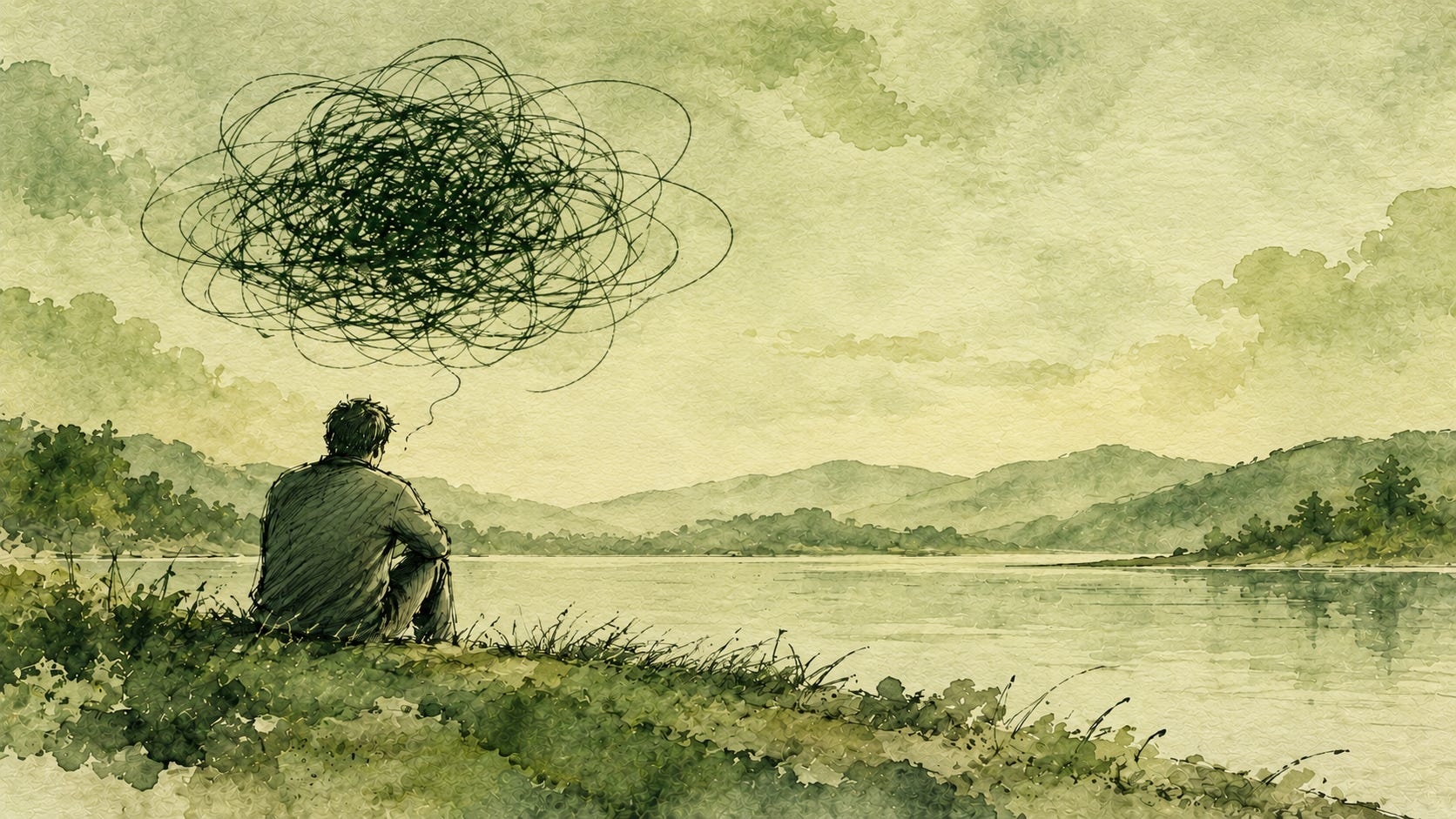
I’d been living with anxiety for months, braced for something awful to happen. Something awful that never materialised. Some triggers for the feelings were clear, while others were harder to spot. Going to work had become a regular one. Nothing major in the scheme of things, but enough to keep me searching there for an explanation of this awful feeling that came so often.
Oddly, whenever this feeling confronted me and I forced myself out of the car and through the office doors, the anxiety usually eased.
The anticipation was far harder than being there.
At home, I’d carry on going over workplace problems long after the day had finished, while some mornings I felt so sick I threw up before leaving for work or on the trip. At night, I’d sometimes wake up sweating, my heart racing, with a fear I couldn’t identify, let alone reason with. On the worst nights, I’d get up to shower and change, then lie awake thinking about the morning. By then, it wasn’t just a mental battle; the anxiety had physically worn me down too, and broken sleep, and getting through an ordinary day took more out of me than it should have.
I’d sought help for anxiety and depression in my early twenties, five or six years earlier, and it hadn’t worked for me. So, I could see no reason another appointment would be worth making, particularly when it meant telling someone new about things I’d hoped to leave behind.
By then, I was in my mid to late twenties. In that time, I’d moved from Melbourne to Brisbane, I’d built a life with Monica, and had a job and a mortgage. I wanted to get on with it and was convinced I should have been handling things by that point. Needing help again seemed to say I’d achieved nothing in the years between, and I worried other people would see me as a failure, too.
Monica had been encouraging me to see someone for a while. She’d listened as I went over countless workplace issues and seen the nights when I woke sweating and afraid. Eventually, I could see she was right. I was stuck, and wishing the anxiety away wasn’t getting me anywhere.
I booked an appointment with the GP Mon recommended, telling myself it was a general check-up. Dr Raj was old-fashioned and patient. While I explained how busy work had been, he took his time and listened, even as I heard myself making the anxiety sound less troublesome than it was. “It’s probably nothing,” I added, for good measure. He suggested a specialist, and when I said I wasn’t that bad, he pointed out that he hadn’t said I was. He couldn’t fix everything himself, he assured me, but he could find someone who could help. I left with a list of names.
That list stayed folded in my wallet for several days before I started calling. Closed books and long waiting lists brought a little relief, giving me an excuse to stop looking, until a receptionist offered me a cancellation the following Friday morning. I booked it.
I began seeing the specialist and wanted something practical to help me manage the anxiety, preferably without having to go back over my life again.
Through those sessions, I understood how quickly a disagreement became a fear that someone would think I was useless. I’d see how later, when a colleague challenged a decision I’d made, I’d feel my chest tighten and I’d want to explain every reason behind it. While they spoke, I’d catch myself wondering why I was trying so hard to be understood. I was still anxious as I worked with the specialist, but I’d started to notice my reaction while it was happening, and I took that back to my next appointment. Over time, the anxiety became more manageable.
For me, getting help again was part of how I got better. That experience gave me the fifth principle of The Way Through: Get Help Again. The help you need in self-growth or recovery may come on your second or third attempt, even if the first has left you doubtful. You might return to someone who knows you and explain where you’re still struggling, or find someone with different experience. It’s okay to keep asking for help until you find the right help to move you forward.
Today, I rarely experience significant anxiety, and asking for help again was part of how I got here. I still sometimes sit in the car for a few minutes before a meeting or presentation, getting myself ready and checking my teeth in the mirror. These days, I’m mostly concerned about what might come out of my mouth, or what’s stuck in it.
Bargaining with the dashboard clock for two more minutes is such a specific detail. Glad you tried again. Thanks for sharing this.