


In 1997, Apple was in trouble. Steve Jobs had just returned, and the proposed campaign was built around the simple line, “We’re back.” Most of the leadership team supported it but Jobs didn’t. He pushed for something bolder, something that actually reflected the kind of company Apple needed to become.
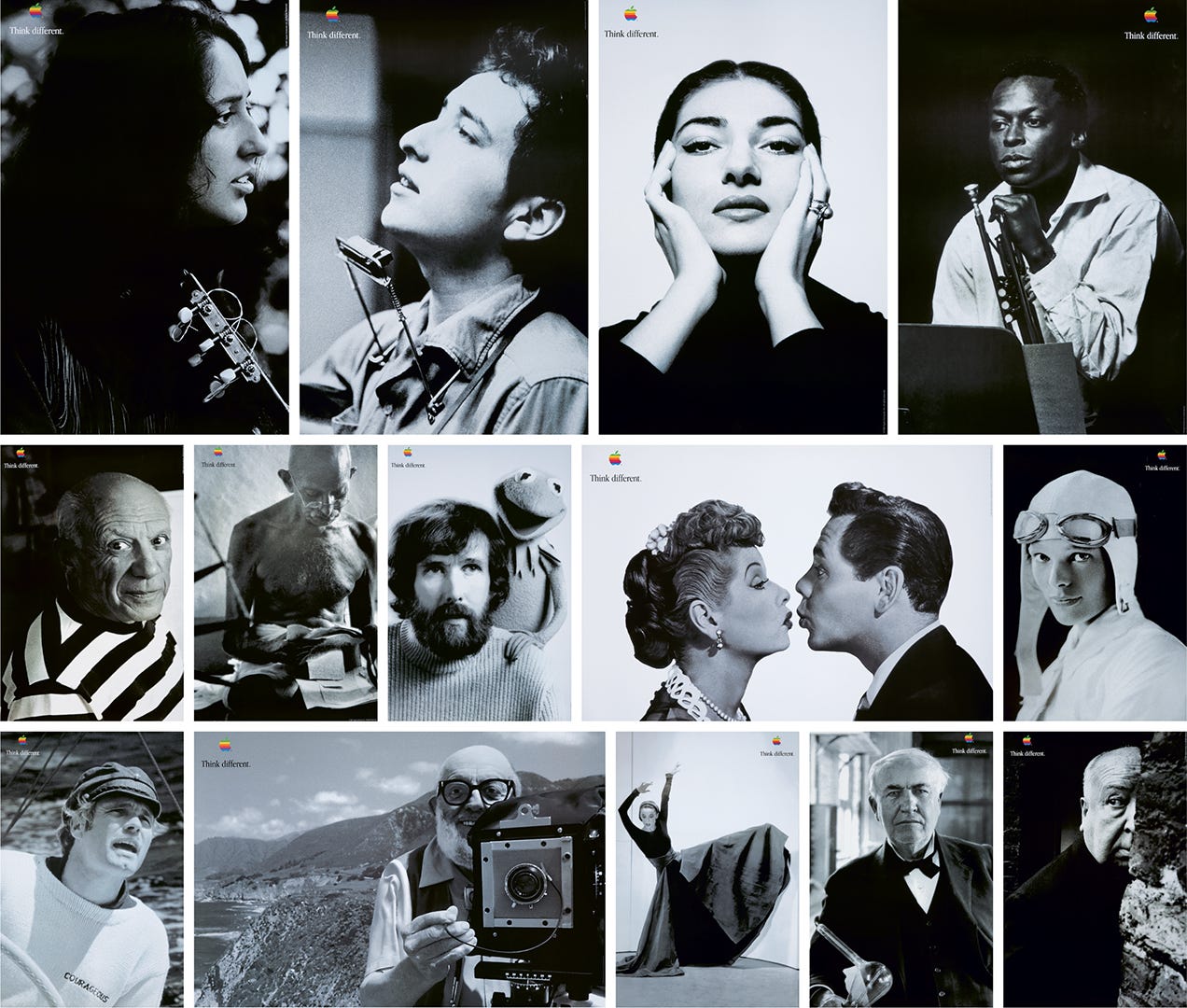
What followed was the iconic slogan, Think Different and the “crazy ones” campaign, kicked off with an incredible Superbowl commercial (check it out here on YouTube if you've never seen it). It landed because it wasn’t just good advertising, it captured an ambition. Apple wasn’t trying to reintroduce itself, rather it was positioning as a challenger, built for people who saw the world differently and wanted to change it. Central to the campaign was a very simple idea; the people who change things are often the ones others struggle to initially understand.
History makes that point clearly. Thomas Edison faced early dismissal of the light bulb as impractical and early concepts of the telephone were brushed off as having no real use. Guglielmo Marconi was treated as if his ideas belonged in an asylum rather than a lab and George de Mestral couldn’t convince manufacturers that Velcro had a place in the market. Even John von Neumann believed computing had limits we’ve long since moved beyond.
Breakthrough ideas rarely arrive to applause. More often, they’re met with doubt, confusion, or outright rejection. History shows us that those who first present the crazy ideas are dismissed or even rificuled. That pattern hasn’t changed. It plays out every day inside organisations when someone brings forward an idea that lies beyond the bounds of normalcy.
Most of us have experienced it, you put forward something you believe in, and the response is immediate, “It won’t work” or “we've tried something like that before. The instinct is to push harder, to defend the idea on its merits alone, but that approach only gets you so far.
What’s often happening underneath the surface, is that people are assessing your idea through the lens of their own experience. If it doesn’t connect to something they already understand, it feels risky or unrealistic, regardless of its actual potential. If you are to persist, and persist you should, it’s less about selling the idea in isolation and more about helping others see it in a way that makes sense to them. The most effective pitches build a bridge between what’s familiar and what’s new. They show where the idea overlaps with something proven, then extends from there.
You can build this bridge by anchoring parts of your idea in examples that have worked before, even if they’re smaller or less ambitious. You can break it down into components that feel recognisable and, over time, that expands how your audience thinks about what’s possible and moves the conversation forward.
Rejection, especially early on, isn’t a reliable signal that an idea lacks value. It often means the story hasn’t landed yet, so instead of stopping at “it won’t work,” the more useful path is to keep the discussion open. Why doesn’t it work in their view? What assumptions are driving that response? What would need to change to make it viable in their eyes? These questions create movement and turn a closed judgment into a problem worth solving.
The ideas that go on to materially matter rarely succeed on the first attempt. They evolve, they get reshaped, and they’re presented in ways that others can finally connect with. That all takes persistence, but also a willingness to adapt how the idea is communicated. Because in the end, the ideas that fundamentally change things tend to follow a familiar path; they’re questioned early, resisted often, and only understood properly in hindsight.
And more often than not, to steal from the 1997 Apple campaign, the people who are crazy enough to think they can change the world, are the ones who do.
Good read 👍