


In January 2009, a US Airways Flight 1549 struck a flock of geese shortly after takeoff, losing all engine power over one of the most densely populated areas on earth, New York City. With only seconds to react, Captain Chesley "Sully” Sullenberger was forced to navigate a dual-engine failure that would most likely end in disaster.
In the 208 seconds that followed, Sully reassured passengers, coordinated the crew and executed a seemingly textbook emergency landing, albeit in the Hudson River.
For those in leadership roles, Sully’s composure serves as a masterclass, proving that the ability to remain grounded and in emotional control is far more critical than any technical brilliance.
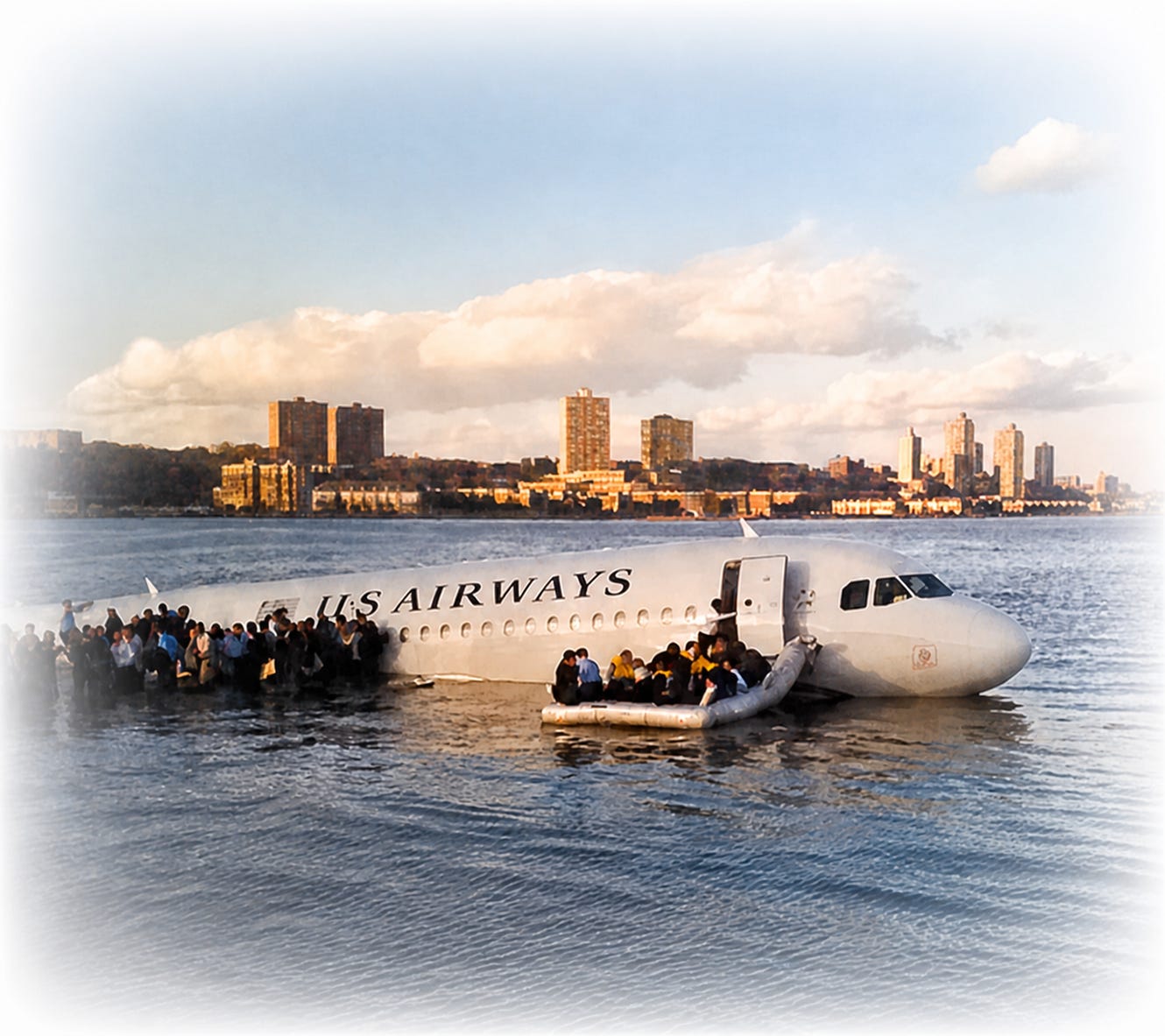
While hopefully none of us ever have to navigate the landing of an aircraft with 155 passengers onboard in the freezing Hudson River, the workplace operates in a similar way. In fact, we learn a lot about a leader by watching what happens around them, particularly in times of heightened pressure. How quickly do people raise problems or bad news? How direct are the conversations when the heat is on? What happens under pressure?
The patterns which emerge at such times clearly signal whether or not people trust their leader, and one of the biggest drivers of that trust isn’t technical brilliance, as you might expect. No, it’s whether the leader stays calm and steady when things don’t go to plan.
Otherwise capable leaders often get it wrong when pressure mounts. They rely on being right, speed of thinking, strong opinion and sharp analysis. Often these qualities assist, but if their emotional response is inconsistent, all of that brilliance amounts to very little.
When people can’t predict how you’ll react as a leader, they start managing you, in fact managing you becomes their primary focus, as opposed to managing the problem at hand. They focus their energy on choosing words carefully and holding back crucial details until the right moment. As a result, problems arise later than they should, communication fails, and the team spends energy managing interactions instead of focusing on the issue.
No measure of brilliance will compensate for a leader who becomes unpredictable under pressure. In fact, potentially it makes it worse, because the leader assumes the quality of their thinking will carry them through. It doesn’t. Their instability quickly becomes infectious and the problem spreads.
Let's break this myth right here; the trust of your people isn't built on how often you’re right, it's built on how people experience you when things are uncertain. Calm leaders create an environment where their emotional control makes it easier for people to be direct and to stay engaged, even when conversations get difficult. When this trusting environment exists and something goes wrong, the focus stays on understanding and responding, not on anticipating and managing your reaction.
When a leader exhibits emotional control, people raise problems earlier, even if things seem uncertain. They speak more openly and tolerate difficult conversations instead of avoiding them, and that brings better decisions. This is why emotional control is a trait of strong leaders. Emotional control builds trust as people learn what to expect from you, especially under pressure.
One way to understand your impact as a leader is to look at how predictable you are when it counts. People don’t need leaders who are perfect, they need leaders who are consistent enough that they don’t have to second-guess your reactions. People need leaders who demonstrate consistent behavior.
Fortunately emotional control isn’t fixed and is built through small actions you repeat until they become an engrained part of your leadership style. Some simple ones include:
Try the tactical summary. Restating other people's points helps shift your thinking from defensive to clear reasoning,
Use a physical anchor. Just pressing your feet firmly into the floor or holding a pen can ground you and arrest a stress response.
Try being a third-party observer. Rather than feel you need to be actively engaged, step back and observe for a moment to avoid reactivity.
Normalize the strategic pause. You do not have to react instantly. Simply saying you want a moment to reflect projects confidence and gives you space to breathe.
Frame challenges as puzzles. Instead of seeing a problem as a threat, talk about it as a something for the team to solve together, again moving the group’s energy away from just being reactive
Brilliance grabs attention, but steady behavior builds lasting trust.
This is an exceptional read! So many aspects resonated. Being able to regulate and co regulate in stressful or challenging situations is a key skill in leadership.
“Normalize the strategic pause.” Yes. 💯