


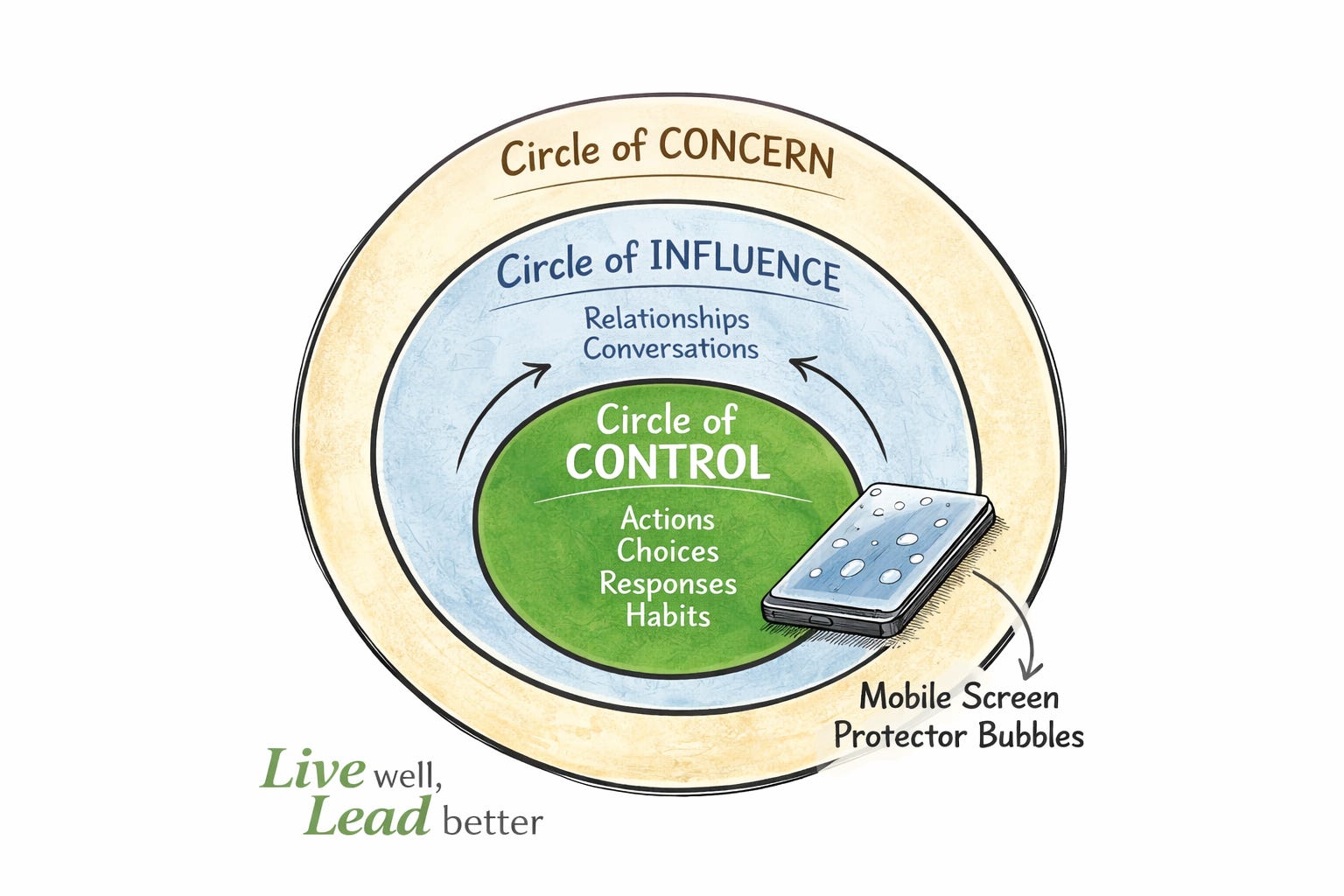
I have a strange relationship with screen protectors. It's kind of love hate. I love the idea of a clear crisp layer sitting protectively over my mobile screen, but I hate air bubbles. I know, it's a little weird, perhaps a little obsessive, but that's the truth. I demand perfection when it comes to my screens. Stay with me here.
Every time I get a new phone, I tell myself this will be the time I do it properly. Clean surface. Dust-free room. Careful alignment. Slow application. Then comes the crucial part, waiting 24 hours for the tiny bubbles to settle.
And every single time, I fail at that last step.
Almost immediately, I start to press those tiny bubbles out, in defiant opposition to the clear instructions. I lift corners. I reapply. I convince myself I can speed up a process that clearly does not want to be rushed. What starts as a small imperfection turns into a worse one, usually with a bit of dust now permanently trapped underneath the protector as a lasting reminder of my impatience.
Now, you may be someone who can live with tiny air bubbles and to that I tip my hat. But this is not really about screen protectors, it's about control.
We like to believe that if we just try a little harder, push a little more, intervene at the right moment, we can shape outcomes exactly how we want them. That effort equals influence and that action equals progress.
But some things do not respond to pressure. They respond to time and that is where most of us come unstuck.
There is a difference between what we care about and what we can actually control. And when those two get blurred, frustration creeps in quickly. We start pressing harder on things that were never ours to fix in the first place.
This is where the idea of circles of influence becomes powerful. Now to be clear, this is not a model of my own making. It was posited by Stephen Covey in 7 Habits of Highly Effective People, first published in 1989 and strangely with no reference to pesky air bubbles under screen protectors.
At the centre of these circles is what we control. We directly control our actions, our responses, our standards and our patience with things like tiny air bubbles. Around that sits what we can influence like conversations, relationships, decisions that we can shape but not dictate. And beyond that is everything else in the space we so often fret about but have no control over; the circle of concern. It contains outcomes, the timing, the reactions of others, the variables we will never fully command. Bluntly speaking, these are the things we are simply wasting time and energy worrying about.
Most people spend too much energy in the outer circle. They try to smooth air bubbles that will settle on their own with time. They interfere with timing that simply needs space and they create more problems while trying to solve the wrong ones.
The shift in thinking that comes from this model is one that often serves me well. It's as subtle as it is important. Focus on what is actually within our direct control and do that well. Do that consistently and then step back. Because patience is not passive, rather it is a disciplined restraint. It’s about knowing when to act and when to leave things alone. It is trusting that not every imperfection needs your immediate involvement and accepting that progress does not always take the form of action. Sometimes it looks like waiting.
I still struggle with screen protectors and I still catch myself pressing bubbles that would have disappeared if I had just left them alone. But I’m getting better at recognising the pattern.
Not everything is yours to fix straight away. Not everything improves with more input, and not everything needs you hovering over it, trying to force the outcome.
Some things just need time to settle.
Very much enjoyed reading this article. The circle of influence is something i reference frequently both in my personal and professional life. It's a great reminder, especially when faced with challenges or things that may 'grind my gears".
I'm learning not to push the river. definitely reduces anxiety